How to Prepare Strawberries for Dogs: Wash, Top, Slice
Most pet-nutrition guides skip the preparation step entirely, or offer one vague sentence. This is a problem, because conventional strawberries are the most pesticide-contaminated fruit in the US grocery market according to the Environmental Working Group - and that matters significantly more for a 10 kg dog than a 70 kg adult human.
This guide covers washing methods, the green top debate, slice sizes by breed, frozen strawberry safety, and the fresh-versus-dried nutritional comparison.
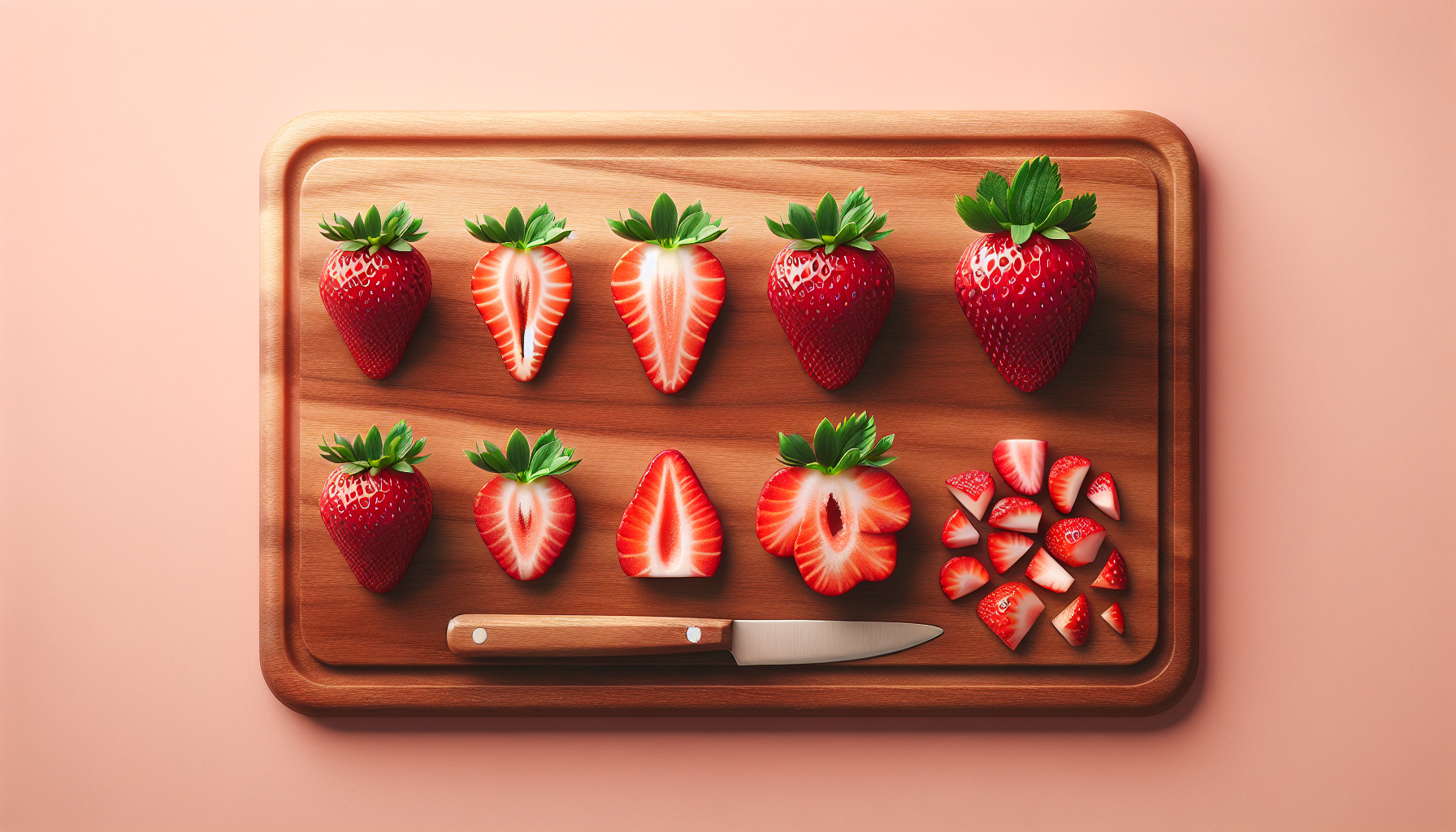
Step 1: Wash Thoroughly - This Is Not Optional
Conventional (non-organic) strawberries topped the EWG Dirty Dozen list for pesticide contamination for nine straight years and remain among its most contaminated entries, ranking third on the 2026 list behind spinach and kale. In the USDA testing EWG draws on, about 99% of strawberry samples tested positive for pesticide residue, averaging roughly eight pesticides per sample. The most contaminated single sample carried 23 different pesticides.
For humans, this is a concern worth managing. For dogs - who typically weigh much less - the pesticide burden relative to body weight is much higher for any given bite. A 150 g serving of strawberries (reasonable for a human snack) represents a significant fraction of body weight for a small dog. This is why thorough washing is non-negotiable.
Cold Water Rinse (Minimum)
Hold the berry under cold running water and gently rub the surface with your fingers for 20-30 seconds per berry. Removes surface-level residue and soil. Faster and better than nothing.
Baking Soda Soak (Better)
Fill a bowl with 2 cups cold water and 1 teaspoon of baking soda (bicarbonate of soda). Add the strawberries and soak for 15 minutes, then rinse thoroughly under running water. Research from the University of Massachusetts found baking-soda soak removes significantly more surface pesticide residue than water alone.
Organic Strawberries (Best)
Certified organic strawberries are grown without synthetic pesticides. The EWG consistently finds organic strawberries to have near-zero synthetic pesticide residue. More expensive but the cleanest option, especially if you feed strawberries frequently.
Step 2: Remove the Green Top - Do It, But Don't Panic If You Forget
The green calyx (the star-shaped leafy top of the strawberry) and the attached leaves are not listed as toxic to dogs by the ASPCA, the Pet Poison Helpline, or veterinary toxicology references. They will not kill your dog. If your dog grabbed a whole strawberry and ate it leaves and all, there is no need for an emergency call.
However, the leaves and calyx do contain compounds that can cause mild gastrointestinal upset in some sensitive dogs - loose stools, excess gas, or mild stomach cramping. The fibre content of the leaves is also higher than the flesh, which can contribute to loose stools if a dog regularly eats the tops.
The practical guidance is simple: take two seconds to snap off the green top before handing over the berry. It costs nothing and eliminates any potential for upset in sensitive dogs.
The Stem
The stem (the small green stalk above the calyx) is essentially inert - it is mostly cellulose. It may be a minor choking or indigestion risk for very small dogs if accidentally ingested whole. Remove it along with the calyx. For large dogs, a short stem that the dog eats incidentally with the berry is not a concern.
Step 3: Slice to Breed Size
Whole strawberries - particularly large ones - can be a choking hazard for small and medium dogs. The berry's shape and texture can cause it to lodge in the throat before the dog chews it. Slicing is a simple prevention.
| Dog Size | Weight Range | Recommended Cut | Examples |
|---|---|---|---|
| Puppy (any breed) | Any | Puree or very fine dice (under 0.5 cm) | All puppies under 4 months |
| Toy | Under 5 kg | Fine dice, 0.5-1 cm cubes | Chihuahua, Yorkie, toy Poodle |
| Small | 5-10 kg | Dice, 1-1.5 cm pieces or thin slices | Beagle, Pug, Shih Tzu |
| Medium | 10-25 kg | Halved or quartered | Labrador puppy, Springer Spaniel, Cocker |
| Large | 25-40 kg | Halved, or whole if the dog chews carefully | Labrador, Retriever, German Shepherd |
| Giant | 40 kg+ | Whole or halved | Great Dane, Mastiff, Saint Bernard |
The table above is a conservative guide. If you have a large dog that reliably chews its food before swallowing, a whole medium berry is fine. If your dog is a fast gulper, always slice regardless of size.
Frozen Strawberries: The Best Summer Dog Treat
Frozen strawberries are genuinely excellent for dogs in warm weather. They cool the dog down, provide the same nutritional value as fresh, and most dogs love the texture. Commercial frozen strawberries are typically picked at peak ripeness and immediately frozen, which actually preserves more vitamin C than berries that have been shipped and stored for days.
Benefits of Frozen
- Cools dogs down on hot days
- Comparable or better vitamin C vs. stored fresh
- Available year-round at consistent price
- Can be used in frozen treat recipes (see pupsicles)
- Slows down fast eaters
Frozen Caveats
- Whole frozen berries are much harder - choking risk for small dogs
- Always slice or dice for dogs under 15 kg
- Let thaw slightly if your dog has dental sensitivities
- Check the bag: some frozen strawberry products add sugar or syrup
- Some frozen strawberry yoghurt products contain xylitol - check every label
Fresh vs Frozen vs Dried: Which Should You Use?
| Form | Calories per 100g | Sugar per 100g | Vitamin C | Verdict |
|---|---|---|---|---|
| Fresh | 32 kcal | 4.9 g | 59 mg (100%) | Best for most dogs |
| Frozen (no sugar added) | 33 kcal | 5.0 g | ~55-60 mg (~95%) | Excellent - comparable to fresh |
| Freeze-dried (no additives) | ~350 kcal | ~55 g | ~200 mg (concentrated) | High sugar - treat as a flavoured kibble topper, very small amounts |
| Dried / dehydrated (plain) | ~250 kcal | ~40 g | ~150 mg | Very high sugar density - tiny portions only |
| In syrup / sweetened | ~80-100 kcal | ~15-20 g | Reduced | Not for dogs - too much sugar. Check for xylitol in 'light' versions |
Sources: USDA FoodData Central. Freeze-dried and dried values vary significantly by brand - always check the label.
Reminder: Preparation Is for Fresh Strawberries Only
Everything on this page applies to fresh, frozen (plain, no additives), or home-dehydrated strawberries. Commercial strawberry-flavoured products - yoghurt, jam, ice cream, gum, toothpaste, flavoured water - are a completely different risk category because they often contain xylitol.
Read the full xylitol product guide before sharing any processed strawberry product →